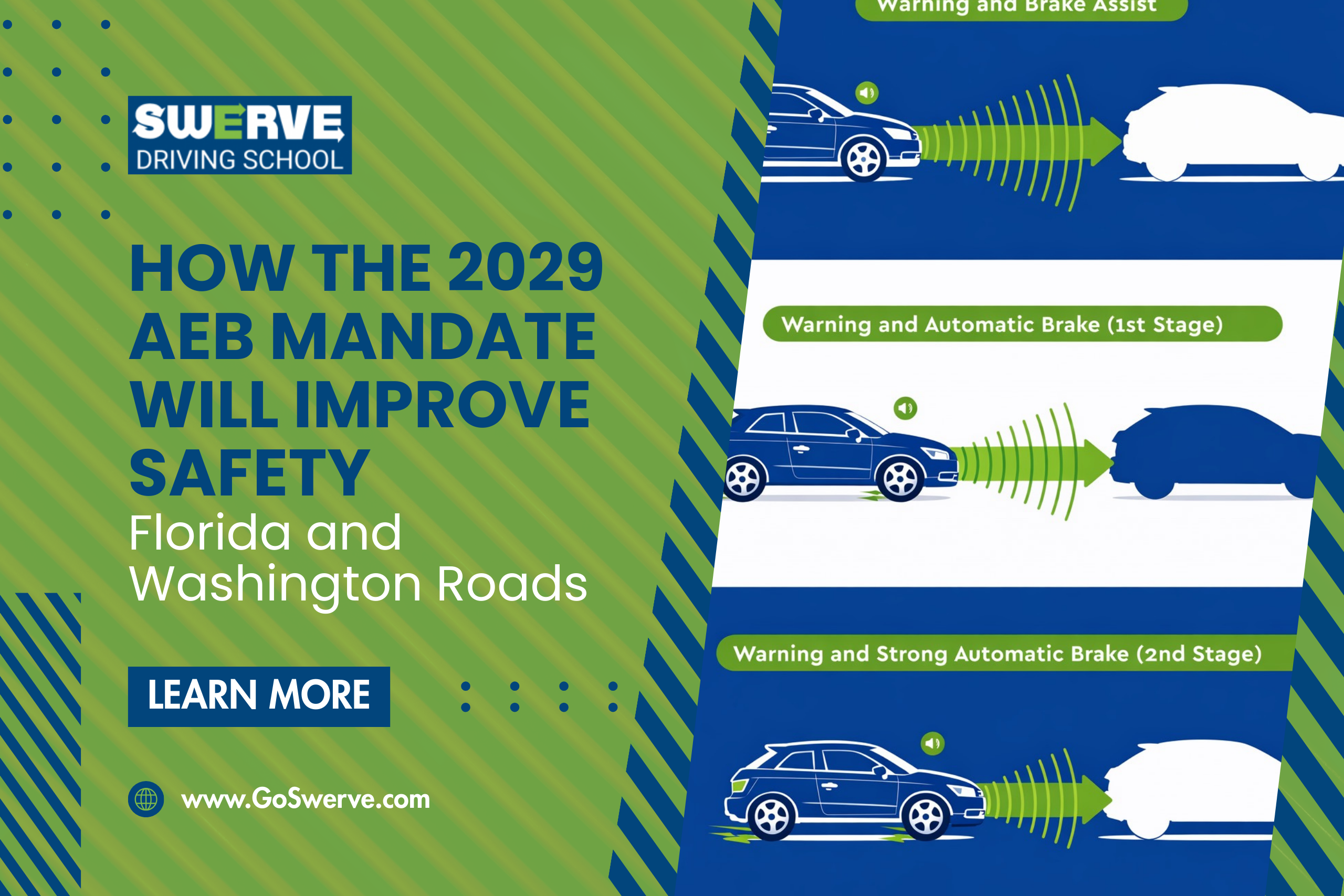
Across the United States, a new safety rule will require automatic emergency braking on all new cars and light trucks by 2029. This change reflects a national effort to reduce serious crashes and protect people behind the wheel and on foot. Automatic emergency braking systems use sensors and cameras to detect when a collision with another vehicle or a pedestrian is imminent and automatically apply the brakes if the driver has not responded. Federal officials estimate that this rule will save hundreds of lives each year and prevent thousands of injuries.
Automatic emergency braking does not replace attentive driving. It supports drivers when attention lapses or hazards appear suddenly. For drivers in Florida and Washington, this technology adds a layer of safety that complements responsible driving habits. AEB systems are designed to detect other vehicles and pedestrians even in low light and across a range of speeds.
Balancing Safety Technology with Good Driving Choices
In Florida, where traffic is heavy in urban areas and pedestrians share road space near beaches, parks, and nightlife districts, the added support of automatic emergency braking can help reduce rear-end crashes and protect people on foot. Florida’s mix of busy highways and local roads creates situations where quick responses can make a difference. Drivers should continue to watch for sudden stops, maintain appropriate following distances, and stay focused on the road ahead.
In Washington, varied conditions including rain, fog, and shifting light in the mornings and evenings affect visibility. Automatic emergency braking systems that detect unexpected hazards can support drivers in these challenging conditions. Drivers Should adjust speed for weather and road conditions, increase their awareness on wet pavement, and anticipate the actions of other vehicles.
What AEB Means for Everyday Driving
Automatic emergency braking works alongside safe driving habits. No technology prevents every crash. Drivers still need to:
- Stay alert and avoid distractions
- Keep safe distances from other vehicles
- Adjust speed for traffic and weather conditions
- Watch carefully for pedestrians and cyclists
Automatic emergency braking helps when a collision is imminent, but responsible driving decisions begin well before that moment.
Safe Driving Starts with Prepared Choices
Planning ahead remains essential in Florida and Washington. Decisions about when to drive, how to handle nighttime visibility, and how to manage speed and attention behind the wheel influence safety outcomes. Choosing not to drive while impaired, setting navigation and music before departure, and watching for changing road conditions are habits that support safer travel for everyone.
How Swerve Driving School Helps
Swerve Driving School provides structured driver education designed to help new and experienced drivers strengthen their skills in hazard recognition, risk management, and real-world decision making. Courses cover:
- Teen driver education program
- Adult driving lessons
- Defensive driving focused on awareness and responsible choices
Automatic emergency braking is an important advancement in vehicle safety, but the foundation of road safety remains sound driving habits. Learning how to anticipate hazards and make good decisions behind the wheel supports safer roads in Florida, Washington, and beyond.