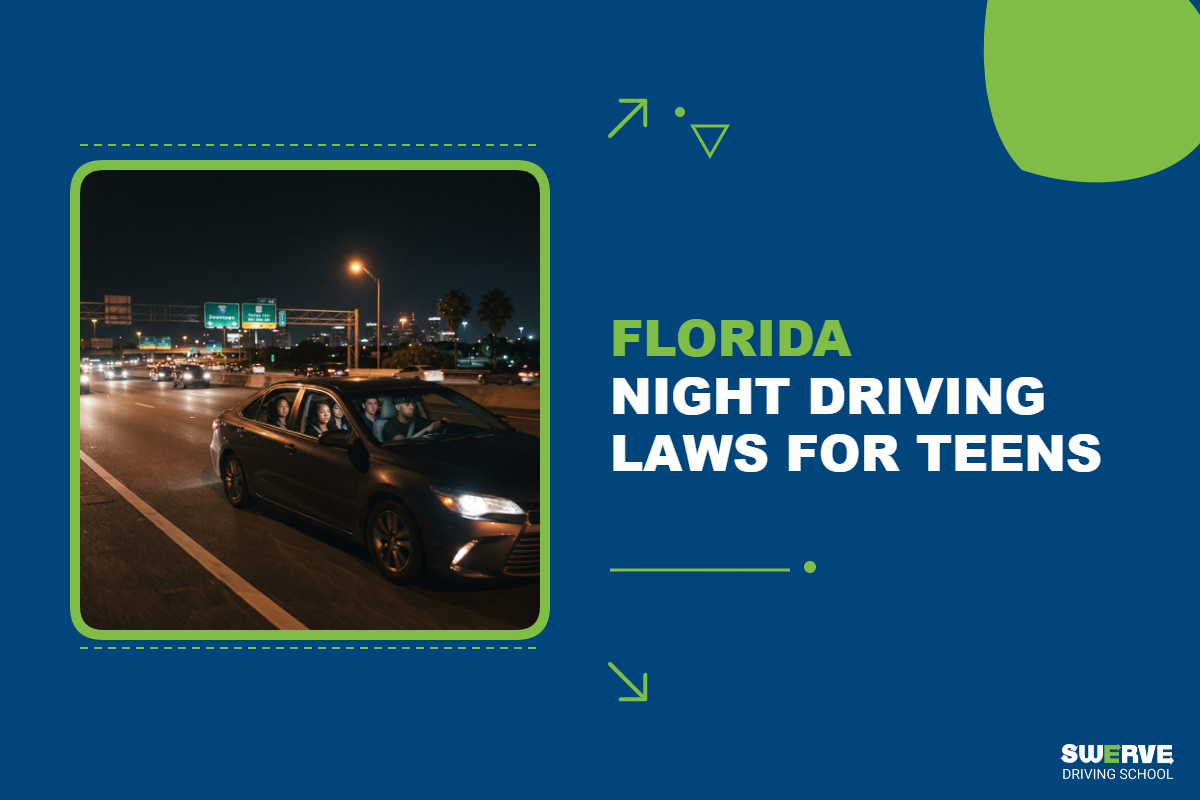
Teen night driving laws in Washington State
Night driving is one of the biggest milestones for a new driver. It feels more independent than daytime practice, but it also comes with lower visibility, more fatigue and fewer visual cues. For Washington teens, it also comes with specific legal limits.
Washington uses an intermediate driver license system for most drivers who get licensed before age 18. That system allows a teen to begin driving independently, but it adds rules about nighttime driving, passengers and wireless devices. The goal is to give new drivers freedom while reducing the highest-risk situations during the first year of independent driving.
This guide explains the Washington teen night-driving laws every new driver and parent should know, including the 1:00 a.m. to 5:00 a.m. restriction, who the rule applies to, which exceptions may apply, how long the restriction lasts and how violations can affect a teen license.
For official state guidance, start with the Washington Department of Licensing teen driver license application page, the Washington State Driver Guide and the current RCW 46.20.075 intermediate license statute.
What is an intermediate driver license in Washington?
An intermediate driver license is the license issued to many Washington drivers who are 16 or 17 years old. It is not the same as an instruction permit, and it is not the same as an unrestricted adult license.
A teen with an instruction permit may practice only while supervised. A teen with an intermediate license may drive independently in many situations, but must follow the intermediate license restrictions until they expire or until the teen turns 18.
The Washington DOL page for drivers ages 16 to 17 explains that applicants must meet the state requirements before getting the first driver license. Those requirements include being at least 16, completing approved driver training, holding a learner permit for at least six months and completing supervised practice that includes night driving.
The official Washington State Driver Guide also explains the two restricted phases for Washington teen drivers: the instruction permit and the intermediate driver license.
- The instruction permit is for supervised practice.
- The intermediate license allows solo driving with restrictions.
- The unrestricted license arrives when the intermediate restrictions end, usually no later than age 18.
The main Washington teen night-driving rule
The core rule is simple: a Washington intermediate license holder may not drive between 1:00 a.m. and 5:00 a.m. unless a legal exception applies.
This restriction is listed in the Washington intermediate license statute and summarized in Washington DOL teen-driver materials. For practical purposes, teens and parents should treat the 1:00 a.m. to 5:00 a.m. window as a protected period when solo driving is generally not allowed.
The restriction applies even if the teen is confident, the roads are empty, the trip is short or a parent gives permission. A parent can set stricter rules, but a parent cannot waive Washington law unless the trip fits one of the legal exceptions.
What counts as nighttime under the Washington restriction?
For the intermediate license restriction, nighttime does not mean sunset to sunrise. The restricted hours are specifically 1:00 a.m. through 5:00 a.m.
That means a teen may be legally outside the night-driving restriction at 10:00 p.m. or midnight, but that does not make those hours risk-free. Darkness, rain, glare, wildlife and fatigue can still make late-evening driving harder than daytime driving. Families can and often should set earlier limits than the state minimum.
Who has to follow this rule?
The 1:00 a.m. to 5:00 a.m. restriction is aimed at Washington intermediate license holders, generally drivers who are 16 or 17. It is different from the rule for a learner permit.
A teen with an instruction permit cannot drive alone at any time of day. Under the Washington instruction permit statute, a permit holder must have the permit in possession and be accompanied by a qualified instructor or a licensed driver with at least five years of driving experience occupying the seat beside the driver.
In other words, the night-driving restriction matters most after a teen earns an intermediate license and begins driving without a supervising adult.
Current exceptions to the 1:00 a.m. to 5:00 a.m. rule
As of this article’s July 2026 review, the current Washington intermediate license statute lists several situations where an intermediate license holder may drive during the restricted hours. Because state agency pages and statutory text can be updated on different schedules, always check the current DOL page and RCW language before relying on an exception.
Exception 1: driving with a licensed driver who is at least 25
The clearest exception is supervision by a licensed driver who is at least 25 years old. If a teen intermediate license holder is driving between 1:00 a.m. and 5:00 a.m., the teen should not treat a phone call, text message or parent permission as supervision. The qualifying licensed driver needs to be in the vehicle.
This exception can be useful when a teen needs practice in late-night conditions, when a family trip begins very early or when a parent wants the teen to drive part of the route under direct supervision.
Exception 2: school, religious or employment activities
The current statute also includes an exception for school, religious or employment activities for the teen driver or a member of the teen’s immediate family. This can matter for early work shifts, late school events, religious commitments or family responsibilities that fall inside the restricted hours.
Teens should be careful with this exception. The trip should be directly connected to the qualifying activity, and families should keep the purpose of the trip clear. A late social stop after work or an unrelated detour may create problems if the teen is stopped.
Exception 3: agricultural purposes
Washington law also recognizes agricultural driving needs. The DOL explains in its agricultural driving permit guidance for drivers under 18 that an intermediate license holder may drive at any hour if necessary for agricultural purposes. The agricultural exception is also reflected in RCW 46.20.070 on juvenile agricultural driving permits and the intermediate license statute.
This exception is narrow. It is not a general permission slip for a teen who lives in a rural area. The driving must be connected to agricultural work or farm-related duties.
How long do Washington teen night-driving restrictions last?
For many teens, nighttime restrictions can expire after one year of safe driving. The DOL teen-license page states that if a teen drives safely for one year, the nighttime driving restrictions expire. The current statute describes the safe-driving conditions that must be met during the 12-month period after the intermediate license is issued.
A teen should not assume the rule automatically ended just because 12 calendar months passed. Crashes, traffic offenses or violations of intermediate license restrictions can affect whether the restriction expires.
At age 18, the intermediate license automatically converts to a regular driver license. The DOL notes that a teen does not need to get a new physical license immediately when turning 18; the restrictions are lifted automatically, and the driver can wait until renewal to receive an updated physical card.
What safe driving means for the one-year rule
The statute focuses on a clean first year after the intermediate license is issued. A teen can lose the benefit of the one-year expiration if the teen has certain crashes, traffic offenses or restriction violations during that period.
- Avoid all moving violations, not only serious violations.
- Follow passenger limits even when the trip is short.
- Do not drive during the restricted hours unless a clear exception applies.
- Do not use a wireless device while driving unless reporting an emergency.
- Report and handle any crash or citation promptly with a parent or guardian.
A clean record matters because the intermediate license system rewards teens who show they can drive responsibly during the first year of independent driving.
Passenger limits still matter during nighttime trips
Night-driving laws are not the only restriction Washington teen drivers need to remember. Passenger limits can also apply, and they can make a legal late-night trip illegal if the wrong passengers are in the vehicle.
During the first six months after an intermediate license is issued, the driver may not carry passengers under age 20 unless those passengers are immediate family members. After the first six months, the driver may not carry more than three passengers under age 20 who are not immediate family members. These passenger rules are listed on the Washington DOL teen license restrictions page and in the Washington State Driver Guide.
Passenger limits matter because young passengers can increase distraction and pressure. At night, that distraction is even more dangerous because the driver is already managing glare, reduced visibility and fatigue.
Examples of passenger situations
- A newly licensed 16-year-old driving three friends home after midnight may violate passenger rules even if the trip ends before 1:00 a.m.
- A 17-year-old driving a sibling may be treated differently than a 17-year-old driving a non-family friend under age 20.
- A teen who qualifies for a work-related exception during restricted hours should still consider whether the passengers in the vehicle are permitted.
- A teen who has completed one safe year may have fewer passenger and night restrictions, but still needs to follow all other traffic laws.
Wireless device rules are stricter for Washington teen drivers
Washington teen drivers with instruction permits or intermediate licenses face stricter wireless-device rules than many adult drivers. The Washington DOL distracted driving guidance explains that new drivers with instruction permits or intermediate licenses cannot use wireless devices while driving, even hands-free, except to report an emergency.
This rule is especially important at night. A quick glance at a phone can become more dangerous when headlights, wet pavement and limited visibility already demand the driver’s attention.
The practical rule is simple: put the phone away before the vehicle moves. Use do not disturb mode, set the navigation before leaving and pull over safely if an emergency call is necessary.
What counts as unsafe phone use?
- Reading or sending a text message while driving.
- Holding a phone to talk while the vehicle is moving.
- Changing music or scrolling through apps at a stoplight.
- Using a hands-free call when the driver has an instruction permit or intermediate license, unless reporting an emergency.
- Looking down to adjust navigation while the vehicle is moving.
Parents should model this rule. If adults expect a teen to keep the phone away, adults should avoid texting or calling the teen when they know the teen may be driving.
Penalties for violating Washington intermediate license restrictions
Violating Washington intermediate license restrictions can lead to more than a conversation at home. The DOL teen-driver page and the driver guide describe escalating consequences when an intermediate license holder receives violations or is involved in certain crashes.
For a first violation, the DOL may send a warning letter to the teen and parent or guardian, and the current passenger and nighttime restrictions may continue until the teen turns 18. For a second violation, the license can be suspended for six months or until the teen turns 18, whichever comes first. For a third violation, the license can be suspended until age 18.
The current statute also states that violating intermediate license restrictions is a traffic infraction. Restrictions other than the wireless-device rule are generally enforced as a secondary action, meaning an officer typically cites the restriction after stopping the driver for another suspected traffic offense. The wireless-device rule has its own enforcement treatment and should be taken seriously.
Why a first violation matters
A first violation may not always mean immediate suspension, but it can keep restrictions in place longer and prevent the teen from earning the benefit of the one-year safe-driving rule. That can mean months of additional limits on night driving and passengers.
For a new driver, the easiest path is to protect the first year. Follow the curfew, follow passenger rules, avoid phone use and drive conservatively enough to prevent preventable citations and crashes.
How Washington night-driving laws affect common teen situations
The law is easier to understand when applied to real-life situations. The examples below are general educational examples, not legal advice. When a trip falls inside the restricted hours, check the current statute and DOL guidance before relying on an exception.
Driving home from a late movie
A teen who leaves a movie after midnight may still be outside the restricted 1:00 a.m. to 5:00 a.m. window, but the trip can become a problem if delays push the drive past 1:00 a.m. Passenger limits may also apply if friends under 20 are in the vehicle.
The safer plan is to set a pickup time that gets the teen home before the restricted period starts or arrange for a parent or another qualifying licensed driver to drive.
Driving to an early work shift
Current statutory language includes an exception for employment activities, but the trip should be directly connected to work. A teen should keep the route and timing reasonable and avoid unrelated stops.
Parents may want the teen to keep a copy of the work schedule or have an employer contact available, especially for very early shifts.
Driving after a school event
School activities can run late, especially athletics, theater, music events or travel back from competitions. If a teen may be driving near the 1:00 a.m. cutoff, the family should plan ahead rather than hoping the event ends on time.
A parent pickup, carpool with a qualifying adult or alternate overnight plan may be safer than asking a tired teen to drive late.
Driving for a family emergency
Emergencies are different from convenience trips. Washington’s wireless-device rules allow use of a device to report illegal activity, summon medical or emergency help or prevent injury to a person or property. For driving during restricted hours, families should still evaluate whether another adult can drive or whether emergency services should be contacted.
A teen should not put themselves or others at greater risk by driving tired, panicked or distracted.
Night-driving practice before getting licensed
Washington teens must complete supervised driving practice before earning an intermediate license. The DOL teen-driver page says teens need 40 hours of daylight driving and 10 hours of night driving with a supervising driver. The current statute also requires certification of at least 50 total supervised hours, including 10 at night, before the intermediate license is issued.
Those 10 night hours should not be treated as a paperwork requirement. They are a chance to learn how the road changes after dark while a qualified adult is still in the vehicle.
What to practice during the required night hours
- Using low beams and high beams correctly.
- Adjusting speed for limited visibility.
- Managing glare from oncoming headlights.
- Scanning for pedestrians, bicyclists and animals.
- Increasing following distance on dark or wet roads.
- Using mirrors without becoming distracted by headlights behind the vehicle.
- Identifying lane markings in rain or poor lighting.
- Navigating rural roads, hills and curves when visibility is limited.
Start night practice in familiar areas and progress gradually. A teen should not begin with a long freeway trip in heavy rain, dense fog or late-night fatigue.
Safety tips for Washington teens driving after dark
Legal permission is only the first step. A trip can be legal and still be unsafe. Washington teens should build habits that make nighttime driving calmer and more predictable.
Leave earlier than you think you need to
Rushing is one of the easiest ways to turn a normal trip into a risky one. Leaving early gives the teen time to drive at a safe speed, handle bad weather and return before the restricted period begins.
Slow down when visibility drops
Headlights do not let a driver see as far as daylight does. If the teen cannot see far enough ahead to stop safely, the teen is driving too fast for conditions even if the speed is below the posted limit.
Increase following distance
Night driving reduces the amount of information a driver receives. A longer following distance gives the teen more time to notice brake lights, debris, pedestrians or animals. Increase the gap even more in rain, fog, snow or on rural roads.
Avoid unnecessary passengers
Passenger restrictions are the legal minimum. Even when passengers are permitted, a new teen driver should limit distractions at night. A quiet vehicle makes it easier to focus on lane position, signs and hazards.
Do not drive tired
A teen who is too tired to focus should not drive. Fatigue can slow reaction time, reduce judgment and make it harder to stay centered in the lane. Parents should make it easy for a teen to call for a ride without fear of punishment when the teen is too tired to drive safely.
Plan the route before leaving
A route that is easy during the day can feel different at night. Before leaving, check the route, parking situation, expected arrival time and return plan. Set navigation before the vehicle moves and avoid making route changes while driving.
Prepare for Washington weather
Rain, fog, snow and wet pavement can make night driving harder in many parts of Washington. Clean the windshield, check wiper condition, use headlights properly and leave extra space. If visibility becomes poor, slow down or delay the trip.
Common mistakes new drivers make with Washington night-driving laws
Assuming midnight is the cutoff
Washington’s intermediate license night restriction starts at 1:00 a.m., not midnight. However, families may set an earlier curfew, and a teen should not plan to arrive home at exactly 12:59 a.m. Build in extra time for traffic, parking, weather and delays.
Thinking parent permission overrides the law
Parent permission is important, but it does not erase intermediate license restrictions. A parent can make a rule stricter than state law, but cannot make an illegal trip legal unless the trip fits a statutory exception.
Forgetting passenger rules
A teen may focus on the 1:00 a.m. to 5:00 a.m. rule and forget that passenger restrictions also apply. If the passengers are not allowed, the trip can be a violation even before the restricted hours begin.
Using a phone because the road is empty
An empty road does not make phone use safe or legal for an intermediate license holder. The phone rule applies whether traffic is heavy or light, and nighttime distractions can be especially dangerous.
Waiting too long to leave
The trip home is where many problems occur. A teen may leave an event later than planned and then feel pressured to hurry before 1:00 a.m. The better choice is to leave earlier or arrange another ride.
Not checking current law before relying on an exception
Washington’s teen-driver laws have been updated over time. When a trip depends on an exception, check the current RCW 46.20.075 intermediate license statute and the Washington DOL page for teen drivers rather than relying on memory or outdated advice.
A parent checklist for teen night driving
Parents and guardians can help teens stay compliant by turning the law into a clear family routine.
- Know whether the teen has an instruction permit or an intermediate license.
- Write down the 1:00 a.m. to 5:00 a.m. restricted period.
- Set a family curfew that gets the teen home before the legal cutoff.
- Review passenger rules before approving any trip.
- Confirm who will be in the vehicle.
- Confirm the destination, route and return time.
- Require the phone to be set before the vehicle moves.
- Encourage the teen to call for a ride if tired, delayed or uncomfortable.
- Keep work, school or activity schedules organized if an exception may apply.
- Review the rules again after any ticket, warning letter or crash.
A teen checklist before driving at night
Before driving after dark, a teen driver should pause and ask a few questions.
- Am I allowed to drive at this time?
- Will I be home before 1:00 a.m.?
- If the trip is during restricted hours, does a legal exception clearly apply?
- Are my passengers allowed under the intermediate license rules?
- Is my phone away and set to do not disturb?
- Do I know the route and parking situation?
- Am I rested enough to drive safely?
- Are the headlights, taillights and windshield wipers working?
- Is the weather safe for my experience level?
- Do I have a plan if I am delayed?
A teen who cannot answer those questions should pause and talk with a parent or guardian before driving.
Frequently asked questions about Washington teen night-driving laws
Can a 16-year-old drive at night in Washington State?
Yes, a 16-year-old with an intermediate license can drive at night in many situations, but the driver may not drive between 1:00 a.m. and 5:00 a.m. unless a legal exception applies. A 16-year-old with only an instruction permit cannot drive alone at any time.
What is the teen driving curfew in Washington State?
For intermediate license holders, the restricted driving period is 1:00 a.m. to 5:00 a.m. Families may set stricter household rules, such as requiring the teen to be home earlier.
Can a teen drive to work between 1:00 a.m. and 5:00 a.m.?
The current statute includes an exception for employment activities for the teen or a member of the teen’s immediate family. The trip should be directly connected to the qualifying work activity. Check the current Washington intermediate license statute and DOL guidance before relying on the exception.
Can a parent give permission for a teen to drive after 1:00 a.m.?
Parent permission by itself does not waive the intermediate license restriction. The trip must fit a legal exception, such as driving with a licensed driver at least 25, qualifying school, religious or employment activity, or agricultural purposes.
Does the Washington night-driving restriction end after six months?
No. The six-month mark mainly affects passenger limits. Nighttime restrictions can expire after one year of safe driving, or they end when the driver turns 18. Violations or certain crashes can prevent the one-year expiration from applying.
Can a Washington intermediate license holder use a hands-free phone at night?
No. Intermediate license holders and instruction permit holders cannot use wireless devices while driving, even hands-free, except to report an emergency. This rule applies during the day and at night.
Do the restrictions show on the physical license?
Washington DOL explains that intermediate driver license restrictions may not appear on the physical license card, but they appear on the driver’s record. A teen should not assume the rules are gone simply because they are not printed on the license.
What happens when a Washington teen turns 18?
The intermediate license automatically converts to a regular driver license at age 18. The driver does not need to immediately replace the physical license card, although the updated card can be obtained at renewal.
Do out-of-state teen drivers have to follow Washington rules?
A teen who moves to Washington with an out-of-state license should review the DOL guidance for new residents and teen drivers. The Washington State Driver Guide explains that drivers under 18 with an out-of-state license may need to apply for a Washington intermediate driver license.
Official Washington resources to review
For the most reliable information, review these official state resources directly:
- Washington Department of Licensing teen driver license application page
- RCW 46.20.075 intermediate license statute
- Washington State Driver Guide
- Washington instruction permit statute
- Washington DOL distracted driving guidance
- Washington DOL agricultural driving permit guidance
- RCW 46.20.070 juvenile agricultural driving permit statute
Final thoughts on teen night driving laws in Washington State
Washington’s teen night-driving rules are designed to reduce risk during the first year of independent driving. The most important rule is that an intermediate license holder generally may not drive between 1:00 a.m. and 5:00 a.m. unless a specific exception applies.
New drivers should also remember that nighttime restrictions are only one part of the intermediate license system. Passenger limits, wireless-device restrictions and safe-driving requirements all work together. A teen who follows each rule protects their license, builds trust with parents and gains the experience needed for safer independent driving.
The best approach is simple: know the law, plan each late trip before leaving, avoid unnecessary passengers, put the phone away and never drive tired. Those habits help teens stay legal and, more importantly, help them get home safely.